"Since Runloop makes infrastructure easy, it makes me a lot more ambitious with what our product can do." Samraaj Bath, Founder, ION
Giving a Website a Job Means Running Agents at Scale
ION ships a team of AI agents that runs continuously on the site, measuring search rankings, AI citations, conversion rates, and ad conversions. The agents propose and execute experiments to improve those metrics. A marketing team defines a strategy and watches ION execute against it at a speed and volume they could never match manually. Customers control agent autonomy.
With agents at the core of the product, running them reliably in production was critical, especially since ION's agents directly work on customers' live websites.
From the beginning, Samraaj Bath, founder of ION, knew the agents needed to run in sandboxed environments, where each agent gets its own computer, context, and tool execution space. A well-configured sandbox keeps consistent agent performance and prevents workloads from interfering with each other. ION needed four things from that sandbox: isolation between customers' workloads, environments loaded with custom tools and per-customer context, sub-minute provisioning to deploy agents on demand, and stability that wouldn't surface as failure to end customers.
Bad Infrastructure Compounds Under AI
Finding a solution that fit ION's needs was more complicated. ION had tried several sandbox providers in the past but ran into issues of poor uptime, slow spin-up times, and difficulty loading custom agents and applications.
Samraaj knew getting infrastructure right was fundamental to ION's performance and its ability to scale. Building it himself was quickly ruled out as the time and resource investment was too high for a startup moving fast. Time spent on infrastructure was time not spent on ION's core product.
The speed of AI development also made a weak infrastructure harder to ignore. As AI writes more code faster, bad decisions compound. By the time consequences surface, untangling them costs far more than getting the foundation right at the start would have. Samraaj needed to get infrastructure right before scaling, not after.
That meant finding the right vendor. Based on his experience, Samraaj had three non-negotiables: fast, reliable, and customizable.
Runloop Is the Right Partner
When Samraaj evaluated Runloop against his three criteria, it cleared all of them: fast spin-up times, strong uptime, and the ability to load custom agents.
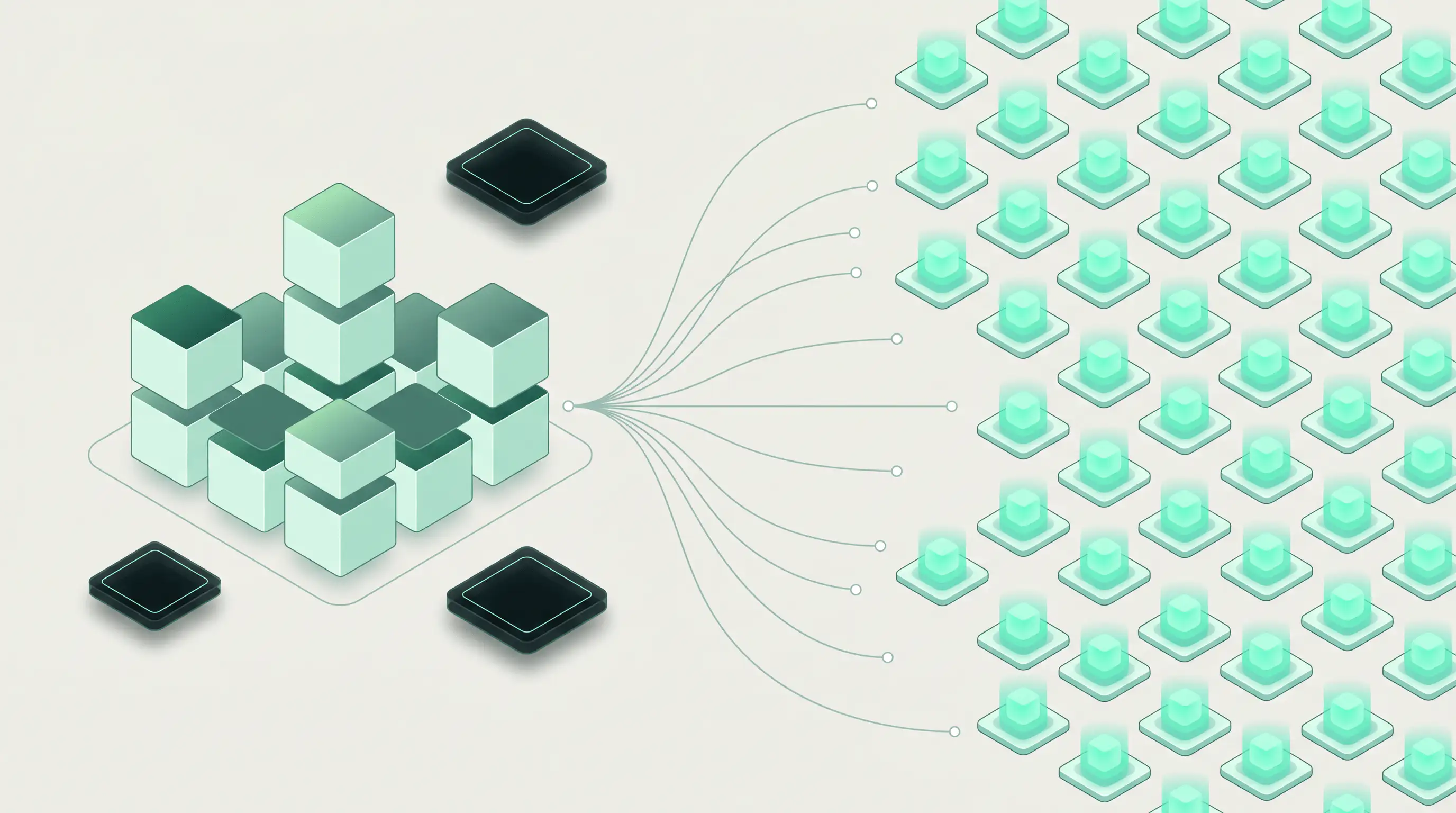
Devboxes on Runloop run inside isolated microVMs and start in under 100 milliseconds. Runloop supports 30,000+ concurrent environments, providing ION the ability to scale.
Agent Gateway also resolved ION's auth problem at the infrastructure level: credentials never enter the agent's environment. Runloop proxies authenticated calls on the agent's behalf, so agents do real work without ever holding the keys. MCP Hub connects agents to tool servers without credential exposure. The infrastructure ION had spent months trying to wire together shipped as ready-to-use primitives.
"All I care about with an infra provider is: is it fast? Is it reliable? And how customizable is it to be conducive for agents, MCPs, and custom dev environments for my customers? Runloop swings to the fences on all three of those."
Beyond the technical fit, Runloop provided a strong partnership. When ION hit an issue, they got unblocked quickly. When Samraaj had a perspective on where the product should go, the Runloop team listened and acted on it.
Runloop Takes Infrastructure Off Samraaj's Plate
The Runloop team worked directly with ION to get them set up. Working closely together, the team guided ION through the migration, staying responsive at every step and available whenever questions came up.
"In three days, I ripped out all of our infrastructure and fully deployed onto Runloop. It was insanely fast. It's been a dream."
After implementation, infrastructure stopped being something Samraaj had to manage. Runloop faded into the background, which is exactly what it's supposed to do. Every devbox spins up fast and runs stably across every customer workload.
Runloop's Blueprints let ION define their tooling, dependencies, and startup configuration once, so every new devbox spins up fully configured. Snapshots let them capture environment state and branch into parallel runs from a known baseline, making it easy to test multiple approaches or roll back cleanly.
"I don't think about Runloop because it works. I can focus on my agents."
With Runloop handling the execution layer, Samraaj is able to focus on what actually drives value for his customers: building and improving ION itself. Because of Runloop's ability to load custom agents and run tools like OpenCode, ION was able to launch features around customers building and running their own agents on the platform.
When Infrastructure Stops Being the Constraint
"Since Runloop makes infrastructure easy, it makes me a lot more ambitious with what our product can do."
ION is at the forefront of a new category: self-improving websites, with agents that own and orchestrate growth for every customer. As agent products expand with more concurrent customers, longer-running tasks, deeper integrations into the systems, the demands on the execution environment will only grow.
For builders, the only edge is the time you spend on agents, not the infrastructure underneath them. Teams who solve infrastructure will go further and build better products. AI's pace and the stakes of getting agents right only make that gap more dramatic. Runloop's infrastructure is built for exactly this new world: isolated, fast, and customizable environments where agents run reliably.




.png)